

Credit & Debit Card Skimming Dispute Solutions in Bangalore
Establishing consumer negligence vs. bank security breaches for fraudulent card cloning and point-of-sale thefts.
ATM skimming devices, rogue point-of-sale (POS) terminals, and card cloning syndicates compromise financial security across commercial establishments in Bengaluru. Disputing unauthorized transactions requires meticulous separation of consumer obligations from institutional liability frameworks. Advocate Syed Khaleel Pasha, practicing from his central chambers at Bowring Hospital Road, Shivajinagar, provides seasoned representation as a premier lawyer for IT & cyber crime in Bangalore across CEN police stations, banking ombudsmen, and civil forums.

1. Credit & Debit Card Skimming Dispute Solutions
Card skimming and cloning remain pervasive forms of financial fraud where criminals install illicit magnetic stripe readers and micro-cameras on ATMs or compromise merchant point-of-sale (POS) terminals to harvest card credentials. When victims discover unauthorized international withdrawals, cloned card swipes, or fraudulent online debits, banks frequently attempt to attempt to shift blame onto cardholders by alleging contributory negligence. Overcoming these automated rejections requires a rigorous legal strategy that differentiates between genuine customer fault and systemic banking security failures.
Our core practice focus involves establishing definitive evidentiary boundaries between consumer actions and bank liabilities under the Information Technology Act and RBI guidelines. Operating from our central office at 29, Bowring Hospital Rd, Shivaji Nagar, Bengaluru, Karnataka 560001, Advocate Syed Khaleel Pasha represents aggrieved cardholders in challenging arbitrary bank repudiations. If you require expert legal intervention against financial institutions, consult our specialized lawyer for IT & cyber crime in Bangalore.
2. Consumer Negligence vs. Bank Security Breaches
The central legal contention in card skimming disputes revolves around establishing whether the breach occurred due to consumer carelessness (such as sharing PINs or OTPs) or an institutional security failure (such as non-compliant POS machines, unencrypted magnetic stripes, or compromised bank ATM networks). Under Indian banking regulations, the onus lies heavily on the financial institution to prove that the customer acted fraudulently or with gross negligence.
Our chambers analyze transaction logs to challenge bank assertions by examining:
- Terminal Compliance: Verifying whether the POS machine or ATM possessed valid EMV chip-and-PIN compliance certification or relied on vulnerable magnetic stripe fallback options.
- Two-Factor Authentication (2FA) Failures: Investigating if transactions bypassed mandatory OTP protocols, pointing toward gateway vulnerabilities or internal bank compromises.
- Geographic Impossibility: Demonstrating that simultaneous physical card swipes occurred in distant cities, proving card duplication and cloning.
With 5.0 star ratings, 611 Google reviews, and 35+ years of experience, our chambers successfully hold major commercial banks accountable for inadequate card security frameworks.
3. RBI Zero-Liability & Limited-Liability Mandates
Reserve Bank of India (RBI) circulars regarding customer protection in unauthorized electronic banking transactions provide clear financial safety nets. If a card skimming incident stems from a third-party breach where the deficiency lies elsewhere in the system and the customer reports the unauthorized transaction within three working days, the customer has zero liability. Even if reported within four to seven days, liability is strictly limited to a minor deductible amount.
We assist clients in enforcing these protections by:
- Drafting robust legal notices citing RBI customer protection guidelines and master directions.
- Challenging bank claims that delayed reporting constitutes absolute waiver of customer rights.
- Securing complete refunds of debited amounts along with statutory interest penalties.
If your bank refuses to honor zero-liability protection, consult our lawyer for IT & cyber crime in Bangalore for aggressive representation.
4. Statutory Reporting & Cyber Crime Portal Registration
Immediate reporting of credit and debit card fraud is a mandatory prerequisite for legal recovery. Failing to notify the issuing bank and lodging a formal complaint on the National Cyber Crime Reporting Portal within stipulated windows can jeopardize chargeback eligibility and legal standing.
Our legal methodology ensures that complaints filed at Bangalore CEN police stations and cyber portals incorporate technical evidence hashes, transaction reference numbers, merchant category codes (MCC), and location logs, preventing banks from dismissing claims as unverified consumer disputes.
5. Banking Ombudsman & Consumer Commission Litigation
When commercial banks issue standard rejection letters blaming cardholders for skimming losses, litigation before the Reserve Bank - Integrated Ombudsman Scheme (RB-IOS) and State Consumer Disputes Redressal Commissions becomes essential. These regulatory bodies possess the authority to penalize banks for unfair trade practices and deficient customer service.
Advocate Syed Khaleel Pasha prepares comprehensive legal briefs backed by judicial precedents to establish institutional liability, ensuring banks compensate victims for financial distress and legal expenses incurred during dispute resolution.
6. Digital Forensics & ATM Skimmer Identification
Proving that a card was skimmed rather than misplaced requires tracing the physical usage history of the card. Syndicates often use sophisticated overlay skimmers that capture PINs while cloning magnetic strips. Forensic analysis of ATM audit logs, CCTV footage from merchant locations, and server timestamp correlations are vital.
Our technical coordination involves working with digital forensics experts to subpoena ATM enclosure logs and merchant terminal maintenance records, establishing that skimming hardware compromised the transaction point. For expert guidance, consult our lawyer for IT & cyber crime in Bangalore.
7. International Card Chargeback & Network Dispute Rules
For fraudulent transactions executed across international payment gateways or foreign e-commerce sites using cloned card data, standard domestic bank dispute procedures can be reinforced by invoking formal international chargeback rules governed by Visa, Mastercard, and Rupay networks.
Fraudulent Transaction Codes
Filing disputes under specific international network reason codes for card-not-present (CNP) and counterfeit fraud.
Strict Filing Windows
Adhering strictly to network timelines (typically 120 days from transaction date) to preserve provisional credit rights.
Merchant Rebuttal Defenses
Countering acquirer bank evidence packages with sworn affidavits and police complaint acknowledgments.
Network Arbitration
Escalating unresolved disputes to international arbitration panels when issuing banks wrongfully reject valid claims.
8. High Court Writ Petitions & Judicial Mandates in Bangalore
When law enforcement agencies or cyber crime police stations delay registering FIRs or investigating multi-million-rupee card cloning rackets involving merchant collusion, victims can approach higher judicial forums to secure court-monitored investigations and police compliance.
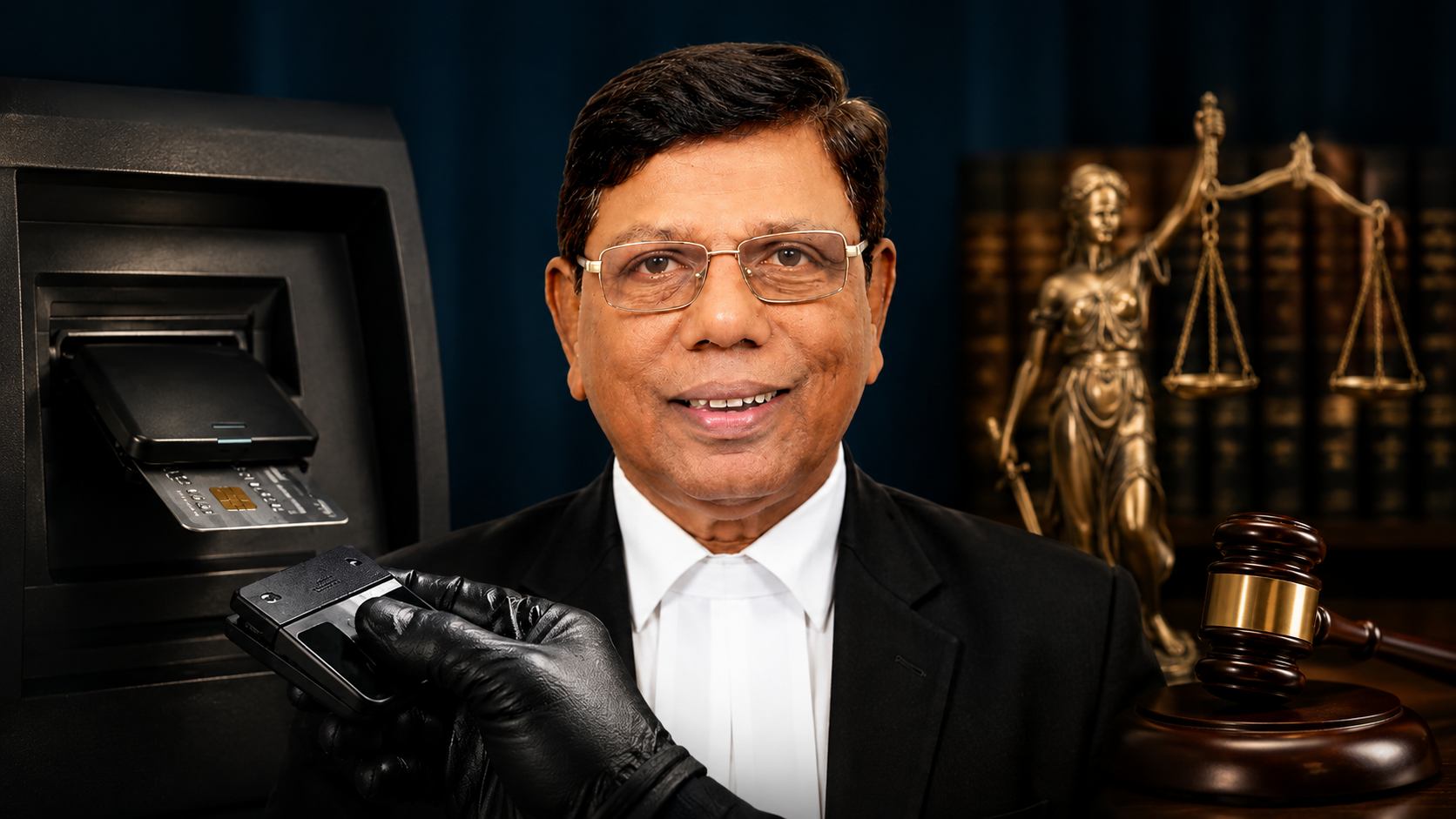
Advocate Syed Khaleel Pasha routinely files criminal writ petitions under Article 226 of the Constitution of India and applications under Section 175(3) of the BNSS before jurisdictional courts in Bangalore. These legal actions compel authorities to investigate skimming syndicates and hold negligent financial intermediaries accountable. Consult our lawyer for IT & cyber crime in Bangalore today.
9. Civil Recovery Suits & Damages for Deficient Banking Services
Beyond banking ombudsmen and criminal complaints, aggrieved cardholders can institute civil recovery suits in commercial courts and consumer commissions against banks for deficiency of service, mental agony, and financial losses arising from compromised security infrastructure.
- Consumer Complaint Redressal: Seeking compensation for mental harassment and arbitrary account freezes resulting from fraud disputes.
- Summary Recovery Proceedings: Enforcing contractual obligations of banks to maintain secure electronic payment channels.
- Damages for Defamation & Harassment: Holding recovery agents and banks legally liable for coercive debt collection practices stemming from fraudulent card debits.
10. Engage Professional Legal Counsel for Card Fraud Defense
Resolving complex card skimming and cloning disputes requires comprehensive legal knowledge spanning banking regulations, IT laws, and consumer protection frameworks. Connect immediately with Advocate Syed Khaleel Pasha via WhatsApp, phone, or by scheduling a consultation at our central Bangalore chambers.
Our legal methodology incorporates rigorous analysis of transaction audit trails, precise drafting of statutory representations, and uncompromising courtroom advocacy to challenge institutional negligence and secure your financial restitution.
Whether handling isolated debit card cloning incidents or sophisticated multi-card corporate fraud rings, our chambers maintain an unyielding commitment to justice and absolute client confidentiality.
Take the decisive step toward total asset recovery by scheduling your consultation with Advocate Syed Khaleel Pasha today.
Explore Full IT & Cyber Crime Legal Services
Discover our extensive legal practice network covering digital financial frauds, social media harassment, data protection, and IT Act defense across Bangalore. Return to our main hub page at lawyer for IT & cyber crime in Bangalore or contact our chambers directly.